Why Every Feature in Inselnova Connects to Something Else
TL;DR: I rebuilt a 25-year-old strategy game with a simple rule: nothing gets added unless it connects to something else. That’s where depth comes from. The gameplay loop that emerged almost accidentally extended the first session from 2-3 minutes to 10-20 minutes, and taught me more about game design than any theory could.
The first session problem
When I played through the onboarding myself, I realised what a new player could actually do. Build something. Maybe upgrade it. That’s it. Click around the map, but it doesn’t mean much until you understand the game. First session was over in 2-3 minutes.
That was the original Inselkampf experience from 25 years ago. I wanted to do better.
The rule
Nothing gets added unless it connects to something else.
That’s not a restriction, it’s where the depth comes from. I don’t want to bolt on features that exist in isolation. Every mechanic should have dependencies and consequences that pull you into other systems.
The loop that emerged
Here’s what got built:
- Council Affairs, decisions for your island. Funny, rewarding, with gambling. That “one more turn” feeling.
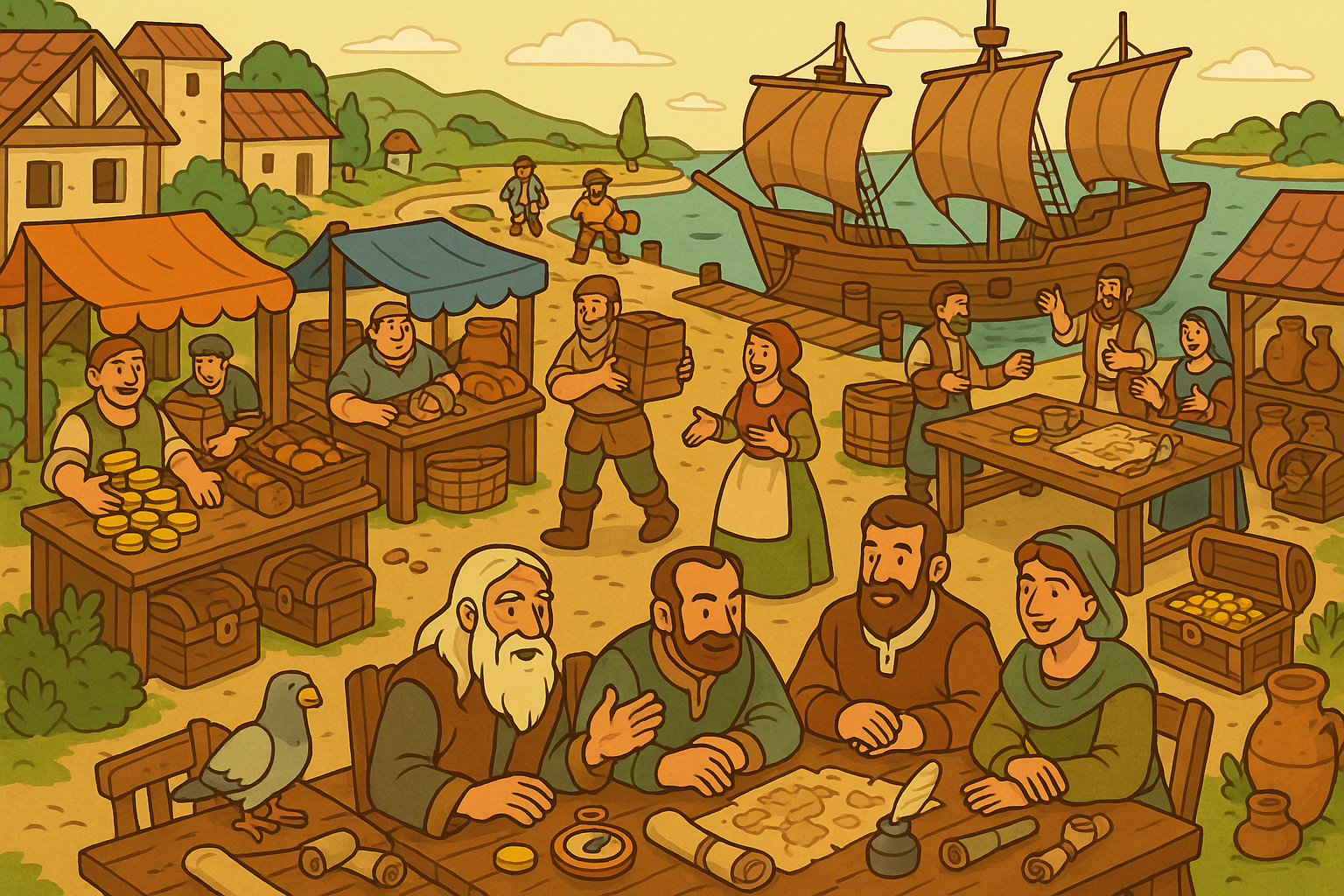
- The Bazaar, a player-driven marketplace. If nobody’s trading, there’s nothing to buy. You need time to build merchant ships.
- Coins as currency. I worried about this one. But the bazaar needs it.
- Food, population, and housing. I wanted settlement management like Settlers. Asked AI to balance it into the existing system.
- Schooling. More people means higher school levels needed. One system feeds another.
- Tax levers and happiness. Happiness wasn’t planned, it was an AI suggestion that sounded interesting.
These features started working together in ways I didn’t plan. You’d build something with the resources you have, then run out. So you’d spend coins at the bazaar to get more. Then you’re out of coins and resources, so you try your luck with the council affairs to win some back. That loops you back into building.
Raiding worked the same way on a longer cycle. I’d start a session, send ships to plunder empty islands, and while they were out I’d run through the build-bazaar-council loop. By the time the ships came back I had raided resources and sometimes treasure to spend at the bazaar.
This extended first play from 2-3 minutes to 10-20 minutes. Enough to feel like you’ve done something. Then you come back 30 minutes later and build more.
How I balanced it with AI
Rebuilding the original wasn’t hard. I had wiki pages with full calculation breakdowns. But balancing a game with interconnected systems? Never done that before. Every new feature risked breaking the balance of everything already in place.
I asked Claude Code to explain the current state of the game, copied that into ChatGPT, and asked for help. I ignored about 70% of what it suggested. Most of it was mid-to-end game content. I only picked out the things that matter in the first session.
The lesson here is don’t try to balance everything at once. Small steps. There’s no point building out mid-game or end-game content if it takes weeks to get there. Focus on onboarding. Get that loop working first.
On game speed, the original was slow. I tried 10x speed and it was way too fast. 5x felt right. Breaks between actions still matter. They let the world breathe.
The island naming story
My main issue is I don’t have people inviting other people. That’s the key to growth. I offered coins for inviting. Nobody was interested. AI suggested blocking troops or spying behind invites. I hated that. You don’t gate the core game.
Then a player asked if they could name their islands.
Penny dropped. To name islands, you need to invite people. It’s decorative, not game-breaking. It doesn’t lock anyone out of gameplay. But it gives invites a reason to exist.
The feature is worth nothing if nobody invites. The invite is worth nothing if you can’t name your island. They connected.
The dogs story
My daughter wanted dogs in the game. I worked with ChatGPT to figure out what dogs could do. It suggested kennels and guard dogs, which actually made sense mechanically. Wrote a balance script. Ran an image generation script and the assets came out on the first try. 30 minutes from idea to live, while doing other work.
That only worked because dogs slot into existing systems. They’re buildings. They cost resources. They affect combat. They don’t exist in isolation.
What I’d tell someone designing interconnected systems
If you’re designing a strategy game, or anything with progression, here’s what I learned.
Start with the first session. Don’t plan the endgame. Get that first loop working where each action creates a reason for the next action.
Make systems depend on each other. When resource A is needed for building B, and building B produces currency C, and currency C buys resource A from the bazaar, the player naturally cycles through all three. That’s depth without complexity.
Use decorative features as soft gates. Island naming doesn’t lock anyone out of gameplay, but it makes inviting worthwhile. Dogs don’t break balance, but they give combat a reason to exist. These are hooks, not walls.
Balance incrementally. Don’t wait until everything is perfect. Get rough balance, test the first session loop, then add the next layer. Each feature should be balanced against what’s already there, not in isolation.
Let emergence happen. You won’t predict how your systems work together. Build them with connections in mind, test, and watch what the game teaches you about itself.
The interconnection is what makes a game feel like a game rather than a checklist. Each action unlocks a reason for the next action. The loop keeps you playing.
That’s worth 20 minutes of first session play.
The game is Inselnova, a free browser-based multiplayer island strategy game. It’s in early access and I’d love for you to try it.