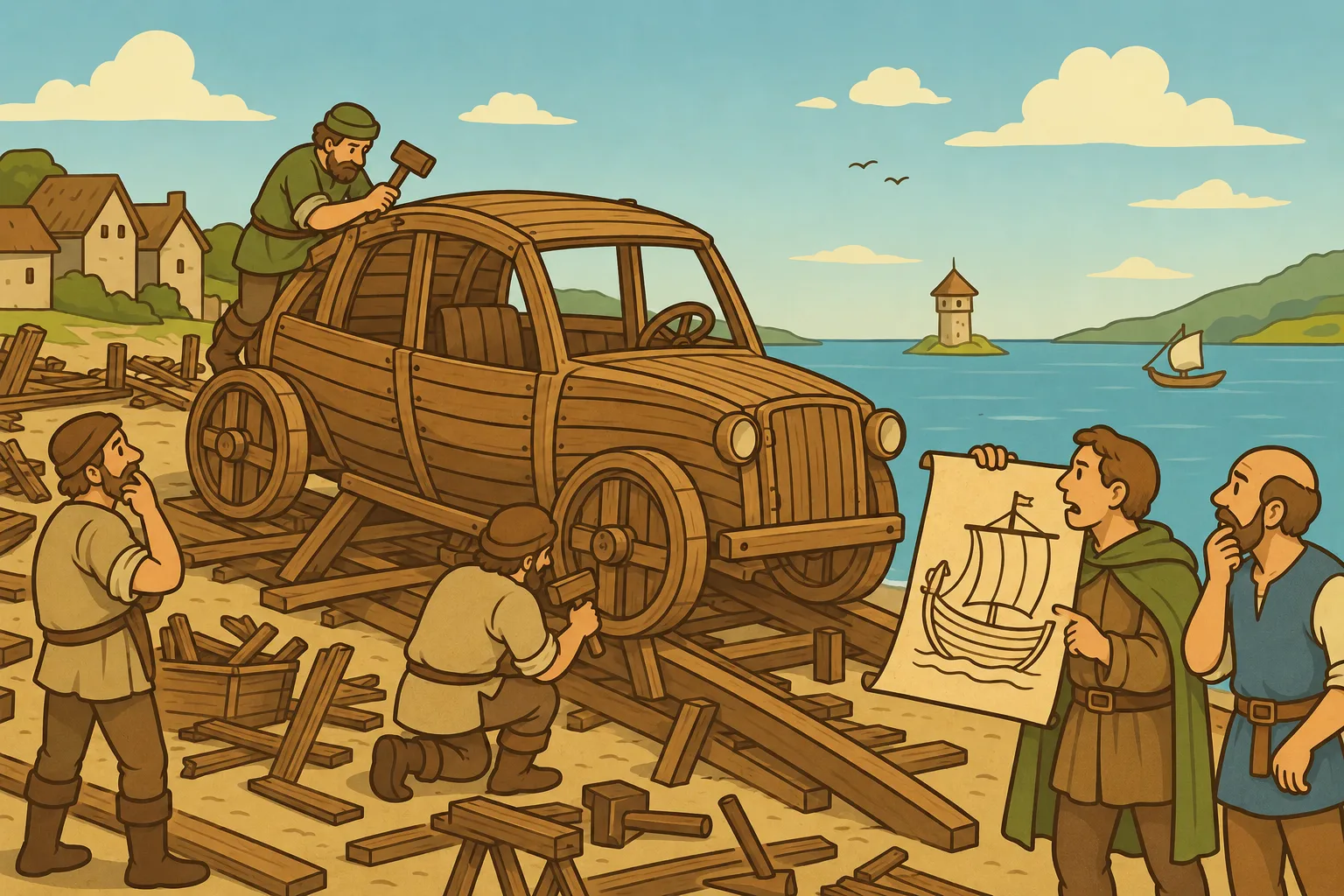
My vague prompts to Claude Code went wrong less than my exact ones
This dev log is about Inselnova: one island, sea wars and alliance politics in a world that never resets. Play free →
TL;DR: I write a lot of my Claude Code prompts vaguely on purpose: “perhaps”, “or something”, “check the other pages and tell me what you think”. I suspected that when I tell the AI exactly what to do, my idea is often worse than what it would have come up with itself, so I went through 1,410 of my own Inselnova prompts. When I left a real decision open, my next message said the AI had got it wrong 11% of the time. When I’d already decided the answer, it was 21%.

How I write a prompt
If I want a button changed, I rarely type the change. I’ll write something closer to the right-hand box below. Quite often I do write the order first, then delete it and put the fluffy words back in, because I want to see where the AI leans before I tell it where I lean.
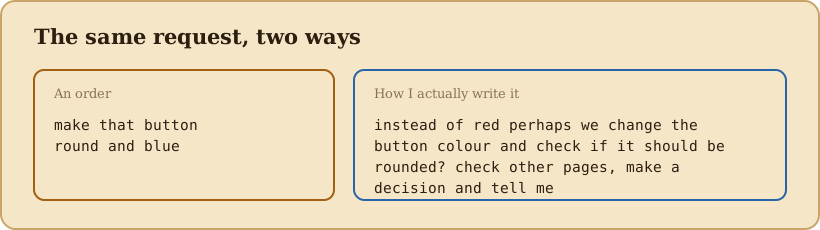
It’s how I work with people. I give them a direction and ask what they think, and I don’t hand them exact instructions, or not all the time anyway. A real one from September, about the shrine icon: “how about the shrine icon? i don’t like it, perhaps it should be fire, or some sort of waving thing”. It drew four icons on a Claude artifact page and left out a waving flag, because it would look like the Colonise flag in the same action bar. I hadn’t thought of that. My next message was “ok use Sacred flame”.
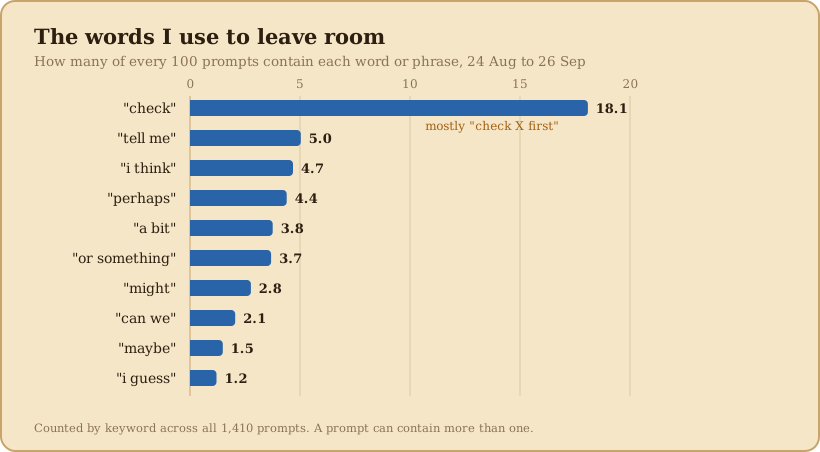
Going through 1,410 of my own prompts
Claude Code stores its sessions on your machine, so I pulled every prompt I’d written for Inselnova between 24 August and 26 September. After removing bare commands, pasted errors and one-word replies, I had 1,410 prompts across 164 sessions. A keyword count was no use for the real question, because when I push back on the AI I rarely start with “no”.
So I had Claude agents read every prompt, and the message I sent after it. Each prompt was either an order, where I’d already decided the answer, or open, where I’d left it a real choice. My next message was a correction, a tweak, a go-ahead or a new topic. I ran it twice, the second time with a stricter rubric, and checked a sample by hand. 45% of my prompts were orders and 19% were open. The rest were questions, housekeeping like commit, and bug reports.
It held on every kind of work except copy
After an order, the AI got it wrong 21% of the time. After an open prompt, 11%. The obvious objection is that I use the two styles for different kinds of work, maybe exact orders on fiddly UI that goes wrong whatever I do. So I split it by the kind of work.
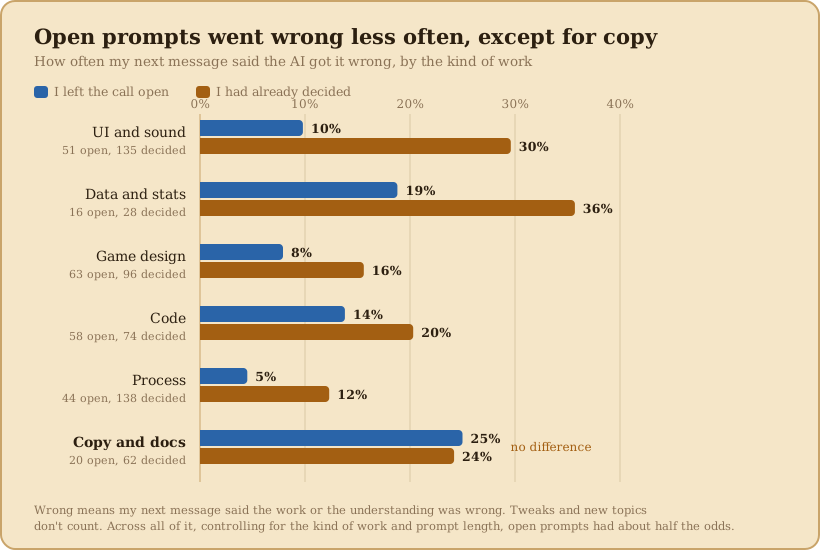
The gap held everywhere except copy. Even after controlling for the kind of work and the length of the prompt, open prompts had about half the odds of going wrong. UI is the biggest gap, 10% against 30%. For blog posts and docs it made no difference, probably because I already know how I want those to sound.
The AI usually did exactly what I told it to do
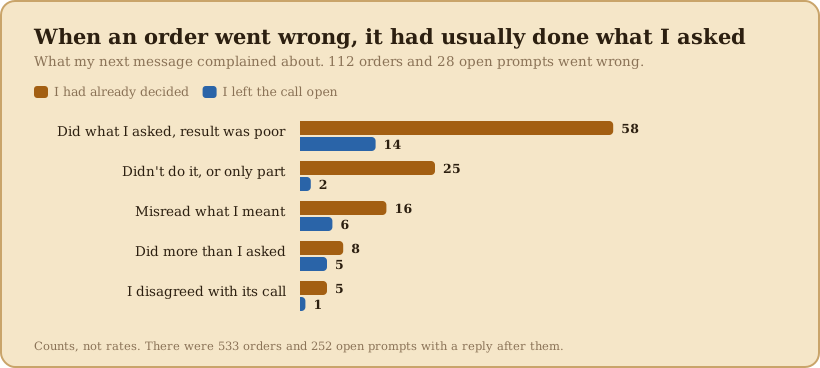
When an order went wrong, it had usually done exactly what I asked, and the result wasn’t good enough. Claude carried out my idea correctly, and my idea wasn’t the best option. The numbers can’t fully separate a bad idea from a bad execution of a good one, but this is the closest they get to the hunch I started with.
Open isn’t the same as vague
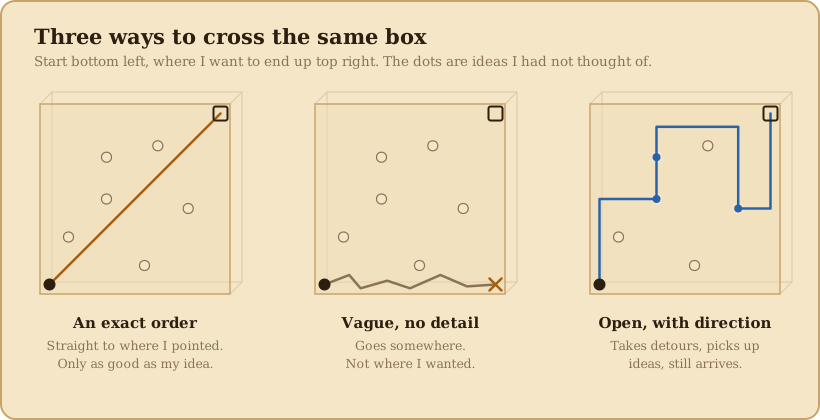
The way I picture it, every piece of work is a box, and the job is to get from one corner to the other. An exact order draws a straight line, so it only ever goes where my idea goes. A prompt with no detail wanders off and ends up in the wrong corner. An open prompt with a destination, some context and a few constraints takes detours, a bit like Snake or the old Windows pipes screensaver, and still ends up where I wanted.
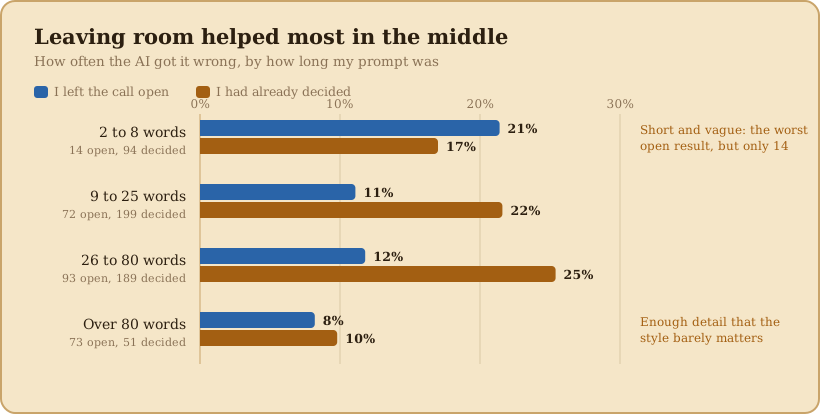
The data fits that. Very short open prompts, eight words or fewer, were worse than orders, although there are only 14 of them. Once there was enough context, leaving the decision open started to help, and over 80 words it barely mattered either way.
Keeping my answer out of the question
If I ask a question with my answer already in it, the AI tends to agree with me, so I ask for a review instead of a yes:
| Leading | What I’d ask instead |
|---|---|
| “do you think colonisation rules favour larger players?” | “review the colonisation rules for a small, a medium and a large player. For each one, tell me what’s easy, what’s hard and where it feels unfair.” |
| “make the button round and blue, that’ll look better right?” | “the red button doesn’t fit. check how the other screens style their buttons, decide on colour and shape, and tell me why before you change it.” |
The data can’t see this one. When the AI agrees with a leading question and it shouldn’t have, I don’t correct it, because I agree with it too.
I put a gate before the code
I end a lot of prompts with “tell me”: check how the other screens do this, decide what you think we should do, and tell me. It stops the agent turning a half-formed thought into code. After a prompt with “tell me” in it, my next message said the AI had got it wrong 11% of the time, against 18% for everything else. It’s a small group and most of it overlaps with my open prompts, so I wouldn’t claim it’s the cause. The practical part is simpler: if the idea is wrong, I find out in a paragraph of text instead of in the codebase.
When vague really is just vague
On 25 September I was changing how population shows on the island screen, thinking out loud. Here’s what I sent, and what I sent back once it had built all of it:
> should we have..
  <total> <residents> <troops>
  and then no reason to say troops using housing
  and perhaps we bring back in the secondary text under the number with a bit of /lore
  and then residents and troops boxes to be slightly different card variant

  ... it builds all of it ...

> this is shit, put it back to what it was with the two boxes in it's own population
  heading, you did more than i told you to do
Claude quite reasonably treated my brainstorming as a spec and built the lot. There was no “tell me” on the end. Doing more than I asked came up after 5 of my 252 open prompts, so it’s rare, but for uncertain changes I now use the gate, or ask for two or three throwaway versions as a Claude artifact before anything touches the game.
Be precise about the problem
This doesn’t prove vague prompting is better. Short vague prompts were some of my worst, and for copy it made no difference at all. It’s one person, one game and five weeks of data, and I chose the style of every prompt myself.
It has changed how I think about prompting, though. I try to be precise about the problem and less precise about the solution. I tell Claude what I’m trying to achieve, point it at the surrounding context, give it the constraints, and then leave some room: perhaps, what do you think, check the other screens, make a decision and tell me. Sometimes my first idea is the right one. I just don’t need to put it in the prompt before Claude has had a chance to come up with a better one.