My vague prompts to Claude Code went wrong less than my exact ones
I labelled 1,410 of my own prompts to Claude Code. When I left the decision open, it went wrong about half as often. Except for copy.

Building a Cannon Fodder style browser game with AI in ten days
I started a second game from an empty folder to see if the way I build Inselnova still works without Inselnova's harness. Ten days, 721 commits and 62 Claude Code sessions later, Boots & Bullets is a playable demo with fifty missions, multiplayer and its own analytics, and the harness had to be rebuilt from scratch alongside it.

The tick engine behind Inselnova: one loop, no resource writes
How Inselnova runs a persistent world on one 1-second loop and computes resources on read instead of writing them to the database on a timer.
Six months building a game with AI, after never finishing one before
A retrospective on building a deep multiplayer browser strategy game with AI, from a web developer who had never finished a game, and what it taught me.
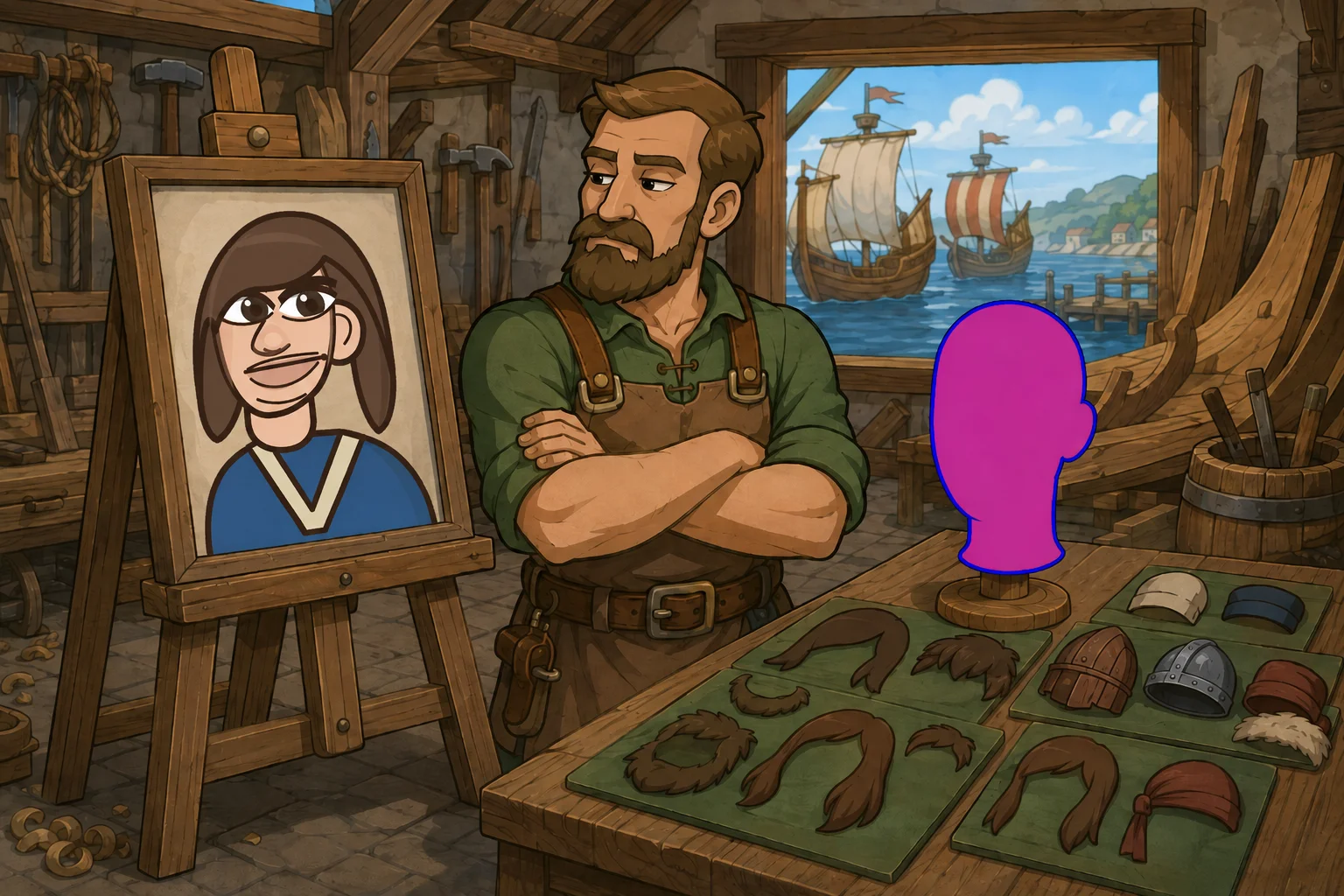
Building a character creator out of AI art in a day
Inselnova has eight fixed avatars and the next version needs far more faces than that. Here is the chroma-key pipeline that turned AI-generated sheets into a character creator for a browser strategy game, the two implementations it cost, and what the whole run billed.
I used to debug my own code in my head. A year of building with AI took that away.
After a year of AI-assisted development, I've lost the thing I was proudest of: being able to debug my own code in my head. On the trade behind it, and what it quietly costs.
Running multiple AI coding agents at once burned me out until I built a system for it
Most people run AI one agent at a time, which wastes their time. I pushed to four and the cognitive switching burned me out. Here's the system that made running multiple AI coding agents work: every session starts from a ticket, a small /now-what skill catches me up, and the work is split across separate editors.
I ask AI for a failing test before I build a feature. I've got more than 5,000 now and I'm not sure that's healthy.
I build Inselnova test-first: ask AI for a failing test, then let it code until green. Better code, but 5,000 AI-written tests get slow and brittle.

The AI skills behind Inselnova
A tour of the Claude Code skills I use to build a browser strategy game, in the order I actually run them: scope a ticket, balance the economy, check the cascade, write a failing test, ship the version.
How to use AI coding skills: less typing, fewer bugs, repeatable results
How to write and chain AI coding skills so a coding agent works your way: less typing, fewer bugs, and repeatable results instead of guesswork.
From daily releases to weekly
How a project shifts from feature factory to steady, tested releases once real users arrive, shown in a browser strategy game with real numbers.

I stopped building dashboards and started asking my database questions. SaaS is about to do the same.
I ask AI to investigate my game's database instead of building dashboards. It changed how I think the end of SaaS plays out.
Codex writes better code than Claude Code. I moved everything back to Claude Code anyway.
Codex writes better code, but after months running both I moved everything back to Claude Code. The difference is iteration size, not quality.

I run an AI loop workflow to fix my own bugs. I won't run one to build features yet.
My AI loop workflow finds, fixes, and proves bugs in my own systems. Here's how it works, what it needs to be safe, and the work I won't hand it.
I cloned a game-marketing expert into an AI skill. The trick was priming, not prompting.
I built an AI marketing mentor by priming three chatbots and letting Claude Code distil the output into a reusable skill. The trick is priming.
Building an AI harness around your app. Releases got slower. Hotfixes nearly stopped.
Inselnova is my first game, built solo with AI, three months live with real players. The AI is fast, and just as fast at shipping a mistake. The real work was the harness: a set of skills and gates every change has to pass before it reaches live.
How I Ship a Browser Strategy Game With Slash Commands and 12 Scripts
I replaced Trello with a custom tracker wired into my game's production database. Players report bugs from inside the game. AI skills in my editor wrap deterministic Node scripts for branching, committing, and deploying. If CI fails, the AI fixes it and retries. Here's how the whole release cycle connects.
What 150,000 Lines of AI-Generated TypeScript Actually Looks Like
Inselnova has 179,101 lines of TypeScript across 1,015 files and 1,272 commits. I didn't write most of it. Here's what that actually means, why it works at scale, and what the senior dev who quit at 150K lines got wrong.
How I Built a Dev Log Pipeline with AI in One Sitting
Sat down in Claude Cowork, dumped six weeks of raw notes about building a browser strategy game, and came out with 5 blog posts, a tone system, SEO integration, cover image generation, and a reusable skill. Here's how the pipeline works.
Blind Coding: My AI Workflow for Building a Game from My Phone
Built Inselnova's core gameplay loop on a road trip using Claude Code on mobile. Tests first, skill files for context, AGENTS.md as a living spec, plan mode to prevent scope creep. Three weeks in, one bad release.
I replaced Google Analytics, Sentry, and Intercom with AI in a few hours
Built custom analytics, error tracking, and re-engagement tools instead of paying for SaaS. Total monthly cost under $20. Each one took a few hours with AI. Here's how and whether you should try it.
I built a multiplayer browser strategy game in two weeks
30 years coding, built a multiplayer island strategy game in two weeks using Claude Code, Codex, and ChatGPT. Started blind on my phone during a road trip. Sharing the workflow, the mistakes, and what I'd do differently.