The Black Tide
In some worlds a hidden sea power known as the Black Tide may take root on the map. It does not bargain, trade, or appear in the common rolls of Governors, but once roused it gathers ships and answers provocation with force.
 Combat
 Chart & Navigation
 Reports & Dispatches
What Governors Can See
The Black Tide is hidden from ordinary society, but it is not invisible on the water. Its islands are shown as Black Tide holdings when selected, and the owner name is presented plainly as The Black Tide. In region view, those holdings bear a black ring rather than the usual rival mark. Their shores are also shown in the fully blighted, forsaken state, as though the settlement had been left to rot even while the Tide still uses it. Those holdings do not open a normal Governor profile, nor does the Black Tide appear in rankings, contacts, or player search.
If the Black Tide has not been seeded into a world, it does nothing at all. Governors need not expect it in every archipelago.

When It Acts
The Black Tide does not roam the chart striking at random. In the current form, it keeps a ledger of those who attack its holdings and directs its fleets against those marked offenders alone. If no one has struck the Tide, and it has no island from which to sail, it remains quiet.
- It must already hold at least one island before it can act.
- It retaliates only against Governors already marked for attacking it.
- If a nearby Black Tide harbour is already armed and crewed, the first answer may come almost at once after the offense is committed.
- Its mark is spent in answers, not hoarded forever. A minor offense may draw a single reprisal, while repeated offenses can keep a Governor marked for harsher returns.
- When choosing a target, the Tide weighs the marked Governor's whole chain of islands rather than blindly striking the nearest or proudest harbour. It prefers a shore where its fleet can do real harm.
- Those later returns do not come in an unbroken stream. The Tide leaves a pause between reprisals and, where a Governor holds several islands, it may spread a wave across different shores before revisiting the same one.
- At greater heat it may divide that wave unevenly, sending a lighter harrying fleet against one shore while a heavier companion wave crashes elsewhere.
- If a Governor keeps provoking it, the Tide may instead commit several of its own harbours against one hard stronghold and try to break that island by weight rather than finesse.
- It still obeys broad war restrictions such as alliance and new-governor protection.
- When it sails, it prefers a boarded wave of several warships rather than a lone hull or a string of near-empty decks, and it now reinforces difficult strikes more aggressively instead of always settling for the thinnest acceptable fleet.
- It does not attack unclaimed islands in the current form.
How It Grows
The Black Tide grows crudely and directly. It favors only those works that help it gather raw materials and launch fleets: the  Main House, raw-material camps, the
  Barracks, and the
 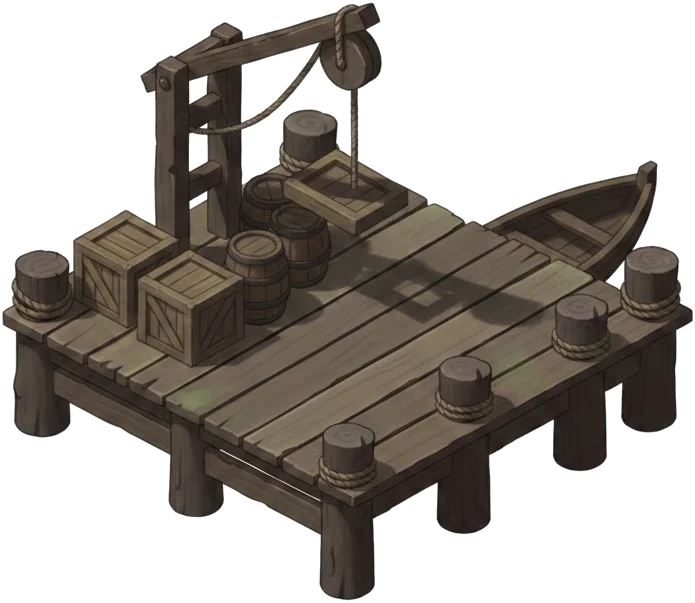 Harbour.
It does not concern itself with civic comfort. Schools, housing, stores, marketplaces, towers, walls, and kennels do not form part of its present doctrine. The Tide seems content to crowd its shores and spend resources as soon as they can be turned into war. Bare footholds are not left frozen forever, however: a larger Black Tide island will keep deepening its harbour, broadening its barracks, and thickening its camps once the first crude bootstrap is in place.
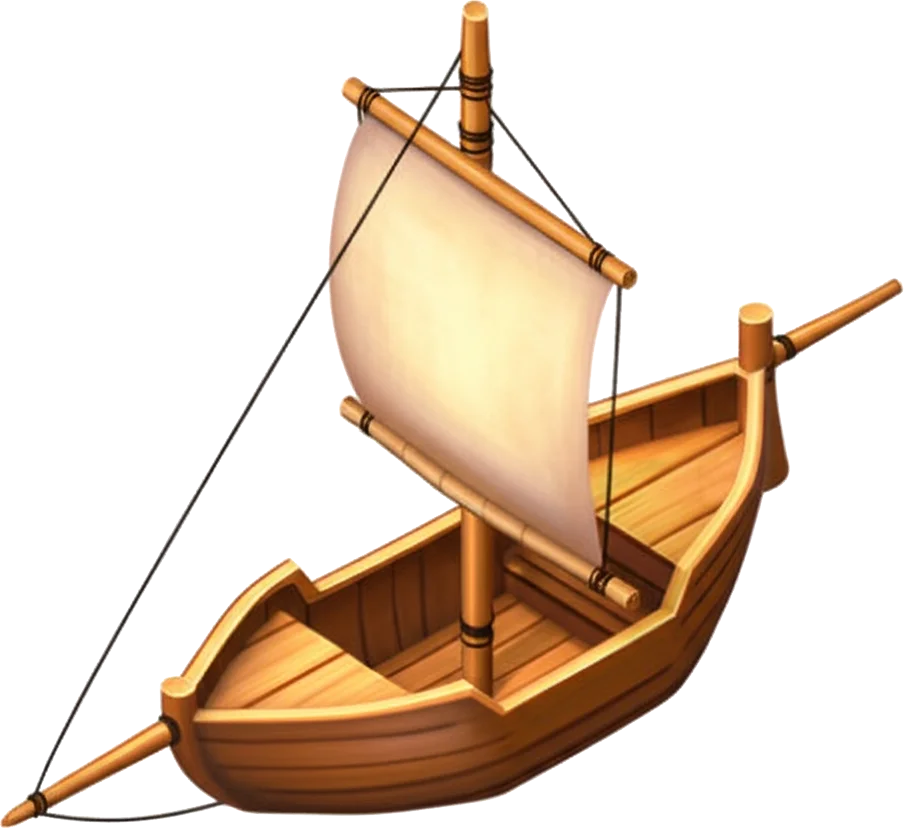
The hull most favored by the Black Tide. It is cheap enough to mass and swift enough to keep pressure on marked shores. In the current form, this is the Tide's principal warship.
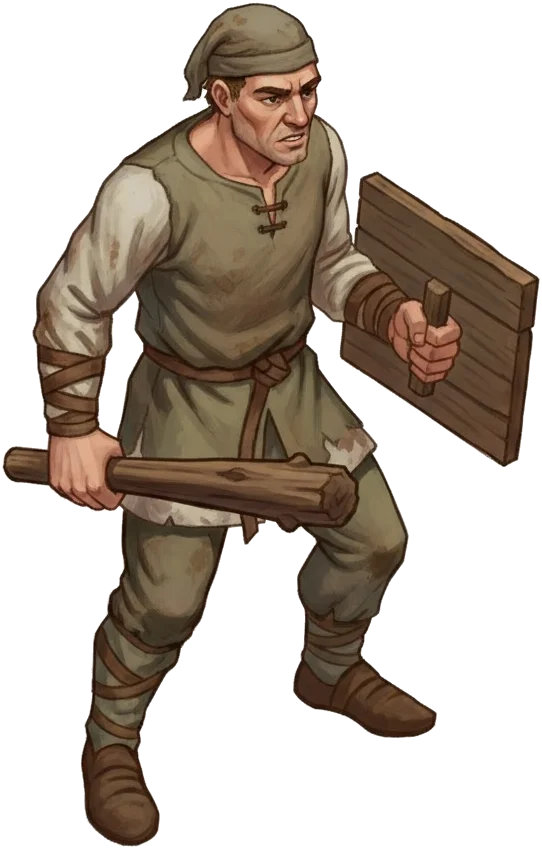
The common fighting body carried by those fleets. The Tide prefers numbers over refinement, filling decks with crude levies rather than disciplined specialists.
What It Ignores
The Black Tide does not appear to be slowed by the burdens that trouble ordinary settlements. Disorder, crowding, poor schooling, and strained provisions do not stay its hand in the current form. It also ignores whole branches of governance that concern ordinary Governors.
- It does not trade or use the marketplace.
- It does not spy.
- It does not pursue research in the current form.
- It does not raise merchant ships, spy ships, guard hounds, or catapults.
- It does not prioritize walls, watch towers, or other defensive works.
How To Read A Black Tide Holding
A shore held by the Black Tide should be read as a future harbour of reprisal. Some such islands may already contain inherited buildings and stores from their previous rulers. Others may begin nearly bare and spend some time raising camps, barracks, and harbour works before their fleets become dangerous.
This means a newly claimed Black Tide island is not always an immediate threat, but a quiet harbour should not be mistaken for a harmless one. Given time, the Tide turns raw material into swarming fleets. It also tends to gather those reinforcements in short musters rather than noisily reforming the same lane of training every moment a queue clears.
Limits of the Current Threat
The Black Tide is dangerous precisely because its purpose is narrow. Governors should also understand what it cannot presently do.
- It does not spread passively across unclaimed shores.
- It does not reclaim abandoned islands by itself.
- It does not colonise.
- It does not prey on unmarked Governors in the current form.
- It does not appear in the social ledgers of the archipelago.
Council Advice
Governors who leave the Black Tide alone may never see it act. Those who mean to provoke it should do so with full knowledge of its nearest harbours, its likely muster strength, and the state of their own shores. For the broader rules of battle and interception, see Combat and Reports & Dispatches.
In the current form, the Black Tide chiefly masses Small Warship and Stone Thrower. It favors repeated pressure from simple fleets over intricate doctrines, and it waits to launch a proper boarded wave instead of dribbling out isolated, half-crewed ships.