Colonisation
Unclaimed islands have names on the charts. A name does not establish ownership: check the island's Governor or unclaimed status before dispatching a fleet. A successful charter keeps the island's name; its new Governor may rename it.
Planting a charter on new shores demands the right vessel and no small measure of fortune. On empty land, a successful charter founds a settlement. An occupied non-starter island can be taken by conquest or razed back to the wild, no matter how recently its governor last logged in. Only two holdings are shielded from force: a governor's capital (starter) island, and their lastremaining island, so no ruler is ever swept out of the world by conquest alone.
- You need 1 Colonisation Ship per attempt. Build her at the Harbour.
- Charter odds start at 65% for your first colony and decrease with each island you own.
- Supply Chests improve any charter, on empty land or an occupied island taken by conquest. Storm Lanterns help only on uninhabited voyages.
- The ship is consumed on success, so keep a spare hull ready when odds are uncertain.
- Use Chart the Voyage before launching to preview your exact odds.
 Combat
 Espionage
 Fleet
FleetWhat you can take
Five situations cover almost every fleet you will ever send. A colony can be prised from any governor, active or absent; the only holdings force cannot strip are a capital and a ruler's last island.
| Target | Can you take it? | Charter odds | Colony ship |
|---|---|---|---|
| Empty island | Yes, if its harbour master accepts a charter | Base 65%, lowered by Expansion Stress per island you hold | Usually returns on failure; overextended fleets risk losing her |
| Occupied non-starter (ruler holds other islands) | Yes. Take it with a colony charter, or raze it back to the wild with a plain attack. Either way: win, raze the Main House to L1, clear every defender. The ruler's activity does not matter | Same 65% base and the same Expansion Stress as empty land | Always lost, whether the raze succeeds or fails |
| A ruler's last island (non-starter) | No by conquest. It can be battered and razed, but only liberated (removing the ruler) once they are Forsaken: absent 14+ days | Not rolled (last-island protection) | Lost like any owned target |
| Starter (capital) island | Never taken. The world reclaims it (liberation) only once its ruler is Forsaken (14+ days absent) | Not rolled (hard block) | Lost if the starter is an active capital; an unclaimed starter behaves like empty land |
| Your own island | No. Your own fleets arrive as reinforcements | Not rolled | Returns home as reinforcements |
The Colonisation Ship
Every expedition needs a 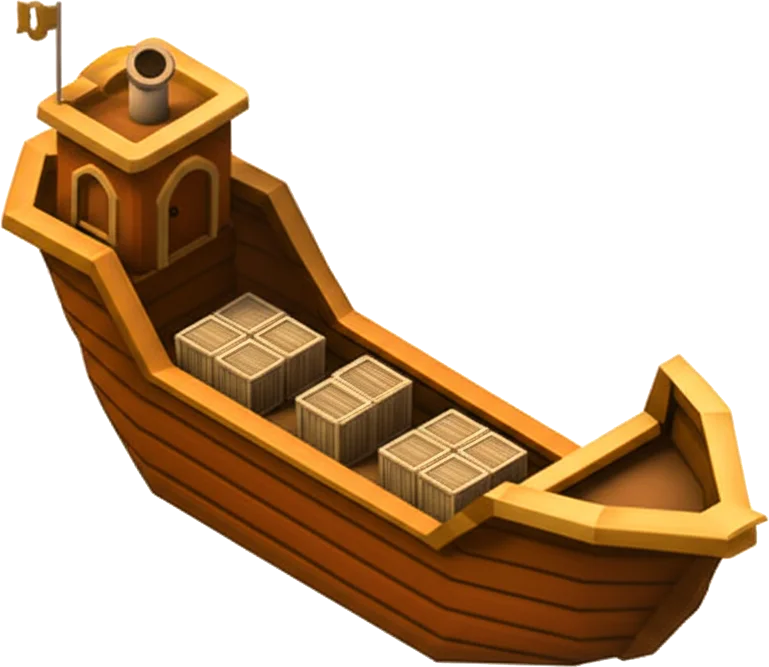 Colonisation Ship: a slow, unarmed vessel carrying the surveyors, carpenters, and founding charter required to claim the island. Without her, no claim can be made regardless of military victory. She must be escorted; even a modest patrol could sink her.
| Cost | Speed | Attack / Defense | Prerequisites |
|---|---|---|---|
| 8000 gold, 7000 lumber | 0.5 | 0 / 5 | Harbour 10, Sailcraft 5 |
Claiming Uninhabited Islands
A fleet carrying a Colonisation Ship sails to an unoccupied island. If the shore is subdued and the founding charter approved, the territory passes under the Governor's authority. The new settlement starts with a Main House at level 1, a Harbour at level 1 so supply convoys can dock from day one, and a modest provision of resources.
Unlike a starter island, a colony has no food cushion. A Governor who leaves it idle will see neglect gather and morale suffer. Build, train, and research early: expansion demands follow-through. Research advancements do not carry over from existing settlements; each colony's scholars must begin their studies afresh in a new Laboratory. See Settlement & Life for managing colony morale.
Not every uninhabited island is eligible. The harbour master marks which islands accept a colonial charter. Empty start places, the shores kept for new Governors, always refuse a charter, even in an ocean an alliance holds. Wild defenders may guard empty shores, and a badly mauled expedition can lose the Colonisation Ship even on a failed charter.
Your second island is marked: the moment it passes to you, word of it is written up and sent to your desk. It arrives as a dispatch and shows itself once, whether you are at the map when it lands or log in the next morning, and it keeps — the dispatch stays in the Governor's Desk to be read again. It is the doubling that earns the ceremony; a third island and every one after it passes quietly, with only the usual charter report.

Razing Occupied Settlements
An occupied settlement cannot be claimed by decree alone. Whether its ruler logged in an hour ago or has not been seen for weeks, the fleet must fight for it: win the battle, batter the old seat of rule down to a shell, and leave no defenders standing. A colony charter then takes the island for you; a plain attack instead frees it back to the wild.
A shuttered isle rejects colonisers outright: the settler fleet is turned away on arrival, the same as any other hostile sail.
Two holdings resist this. A ruler's last island can be battered but never taken, and is only liberated (removing the ruler from the world) once they are Forsaken: absent at least 14 days. Their capital (starter) island can never be taken by a charter at all: the world reclaims it, and only when its ruler is likewise Forsaken. See Settlement for how liberation frees an island without handing it to the attacker.
Taking or razing an occupied island requires all of the following in a single assault:
- Catapults in the fleet to inflict structural damage
- The target's
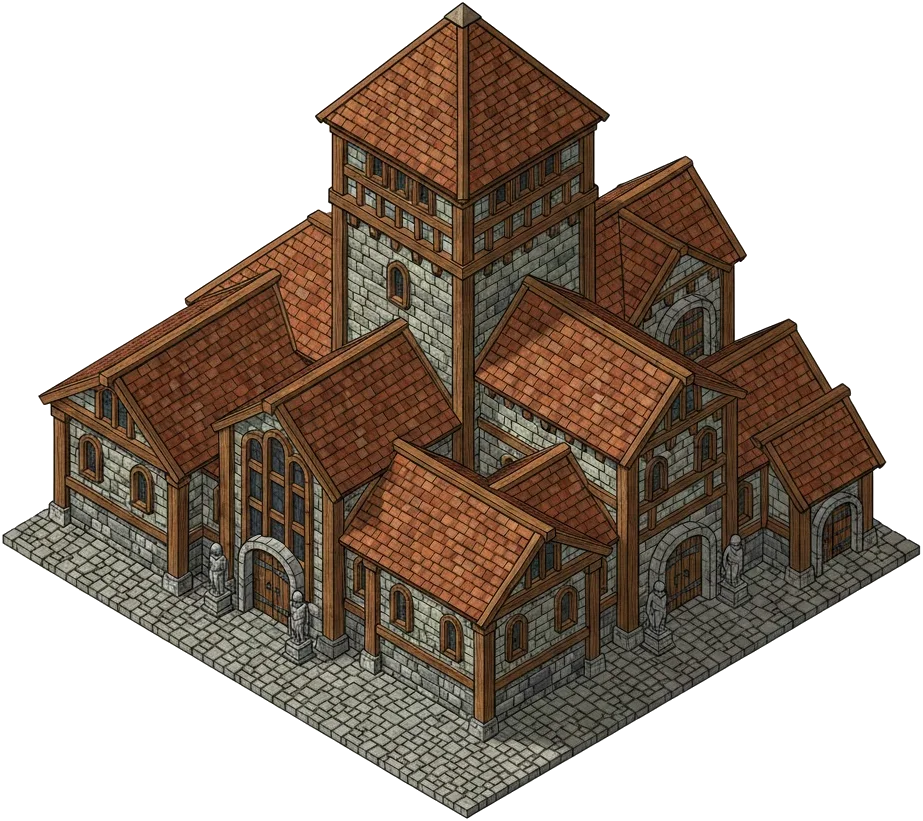 Main House reduced to level 1
 - Every defending unit eliminated. A single holdout prevents the charter party from landing
- A Colonisation Ship in the fleet if you mean to take the island. Without one, a won assault that razes the Main House frees the island to the wild instead
If the charter holds, ownership passes to the attacker. Every building collapses except the Main House and the Harbour, each left standing at level 1 — a habitable shell and a working dock, so the new Governor can ferry in supplies at once. The previous Governor's active construction, research, and training orders are cleared, and the island's name remains as it was. The new Governor receives the battered holding as it stands after battle and plunder.

Charter Odds
Even when every condition is met, colonisation is not guaranteed. The founding charter must be ratified, and fortune plays a role. The base charter odds sit at 65%, and the same Expansion Stress applies whether the charter settles empty land or razes a rival governor's island. Both grow your realm by one holding, so the Council judges them alike.
Expansion Stress
To discourage unchecked land-grabbing, every island you already hold weighs on a new charter, lowering its odds. This applies equally to claiming uninhabited shores and to seizing a rival colony. A sprawling empire cannot snap up new holdings for free. Developing your existing holdings relieves the burden: governors who build before they expand keep far stronger odds than those who leave colonies idle.
Razing an occupied island still demands the harder campaign: military victory, catapult damage, and a Main House battered to a shell. But once the charter is cast, its odds are judged by the same Expansion Stress as any other.
Charter Stores
Some workshop goods can be loaded into a charter before it sails. A Supply Chest improves the chance that the charter is accepted, whether you settle empty land or take an occupied island by conquest, up to two chests per voyage. A Storm Lantern does not improve the claim itself; it improves the crew's chance of bringing the Colonisation Ship home after a failed attempt, up to three lanterns per voyage.
Charter stores are spent when the fleet is dispatched. Supply Chests apply to both uninhabited shores and occupied takes. Storm Lanterns are only offered on voyages to uninhabited shores, since the Colonisation Ship is always lost when an occupied island is taken by conquest.
How do existing islands change charter odds?8 examples
| Scenario | Charter Odds | Notes |
|---|---|---|
| 1 island (first colony) | 65% | No expansion stress |
| 2 islands, new one undeveloped | 57% | Full stress from idle colony |
| 2 islands, new one developed | 62% | Development offsets the penalty |
| 5 islands, all well-developed | 52% | Strong governors expand steadily |
| 5 islands, all undeveloped | 33% | Grabbing land without building |
| 10 islands, all well-developed | 36% | Large empire, fully invested |
| 10 islands, half developed | 12% | Mixed development drags odds down |
| 10 islands, none developed | 5% | Land-grabbing hits the floor fast |
Morale
Both types of charter are affected by morale. If happiness at the launching island falls below 40, charter odds drop by about 10%. In severe unrest, the penalty can reach 45%.

Fate of the Colony Ship
Uninhabited targets: On success, the ship is consumed, her timbers broken down for the new settlement. On failure, she normally returns to port, though a bloodied landing may still cost the vessel.
Occupied targets: The Colonisation Ship is always lost once committed, whether the raze succeeds or fails.
Perils of Overextension
Governors who spread their fleets across too many islands risk losing their Colonisation Ship even on a failed uninhabited charter. Once a Governor holds 5 or more islands, return voyages grow perilous. Supply lines stretch thin and the ship may not survive the journey home.
The risk starts at 50% with 5 islands and rises by 10% for each additional island, capping at 90%. This applies only to failed charters on uninhabited shores. Successful foundings consume the ship as normal, and occupied-island charters always cost the vessel.
How risky is a failed return?ship loss examples
| Islands Owned | Ship Risk on Failure |
|---|---|
| 1 | - |
| 2 | - |
| 3 | - |
| 4 | - |
| 5 | 50% |
| 6 | 60% |
| 7 | 70% |
| 8 | 80% |
| 9 | 90% |
| 10 | 90% |
| 12 | 90% |
| 15 | 90% |
| 20 | 90% |
Protections
- Last-island protection. A Governor's final settlement cannot be seized. The Council will not ratify a charter that would leave a ruler without territory.
- Capital protection (hard line). A Governor's capital island can never be colonised by another Governor, not even when Forsaken. Its main house is also shielded from catapult damage while the Governor is active. Once the Governor has been Forsaken (absent ≥ 14 days) the capital's main house becomes a legitimate catapult target for any attack mission: razing it liberates the capital: the absent Governor is removed from the world and the slot returns to the wild as an empty starter awaiting a new arrival. The liberator never takes the slot. When first appointed, the starting island is the capital.
- Ordinary colonies. A non-capital island can be taken by a colonisation charter or liberated by a plain attack that razes its main house, no matter how recently its Governor last logged in. Liberation casts it back to the wild as an unowned island the attacker does not keep. The one shield is the no-elimination rule: if the colony is the Governor's last island, it can be battered but is only liberated (removing that Governor from the world) once they are Forsaken (absent ≥ 14 days), and it can never be seized by a charter.
- Moving the capital. A Governor may relocate their capital to any other island they own through the Realm > Dominion tab. The old capital loses its protection and becomes vulnerable, while the new capital gains it. This can only be done once every 48 hours, and the transfer is refused while hostile fleets are inbound to any island under that Governor's command.
- Self-colonisation. A Governor cannot colonise a settlement already under their own authority. Such fleets arrive as reinforcements instead.
- Duplicate charters. If you dispatch two Colonisation Ships to the same uninhabited island and the first fleet claims it, the second fleet recognises the new settlement as friendly and returns home safely. No battle, no ship lost.
- No colonial grace period. A newly founded or razed settlement receives no protection. Rival fleets already en route may land before the first wall is built. Escort your Colonisation Ship with a garrison fleet via Fleet to defend the claim.

Contested islands
During an alliance Hold contest the Council marks one or more empty islands as contested. A contested island ignores the ordinary colonisation rules, because the prize is not the land: it is the control time your alliance banks while holding it.
- Always settles once cleared. A charter on a contested island that has been battered down to a level 1 Main House is ratified every time. There is no charter roll and no Expansion Stress against it.
- No waiting for Forsaken. A rival alliance can take a held contested island the moment they win the battle and raze its Main House to level 1. The 14-day Forsaken wait does not apply, and last-island protection does not shield it.
- Razing is unchanged. Taking one still demands the full conquest: win the battle, bring the Main House to level 1, and leave no defender standing. The contested island only changes the charter, never the siege.
- Immune to neglect. A contested island gathers no neglect and cannot be lost to absence. It is a battlefield, not a colony to nurse.
- The clock is control, not the calendar. Every minute your alliance holds a contested island is tallied toward the goal. That time adds up across several contested islands and across separate spells of control, so losing and retaking an island never wipes what you already banked. The first alliance to reach the contest's target hours wins the reward in the standings.
- It empties when the contest ends. When the Hold concludes the contested islands revert to bare, unowned shore. No one keeps the territory. The banked victory, not the rock, is the prize.
- Only banners bank. An alliance contest only banks time for alliances. A governor with no alliance can still seize and sit on a contested island, but banks nothing and cannot win. While they squat there no alliance gains from that island either, so a lone governor can stall the contest on it until they are razed off.
Common questions
Can a colonisation ship claim an occupied island?
Yes, on any non-capital island whose governor still holds at least one other island, no matter how active they are. Win the battle, raze the Main House to level 1, clear every defender, and pass the charter roll. Two targets resist: a governor's last island, which cannot be seized, and their capital, which a charter can never claim at all and which the world reclaims only once its ruler is Forsaken (absent ≥ 14 days).
Does research carry to a new colony?
No. Each colony begins its own research path. Build a Laboratory there if the outpost needs local advancements.
Can a second charter fleet hit after the first succeeds?
If the first fleet claims an uninhabited island, later friendly charters to that same shore recognise the new settlement and return.
Why did the island I captured vanish when the contest ended?
Contested islands are not kept. They revert to empty shore once the Hold concludes. What you keep is the banked control time and the reward it earns in the standings, not the rock itself.