Raiding
Unclaimed islands hold stockpiles of resources guarded only by wild defenders. Win the landing and the fleet sails home with as much as its holds can carry. The shore's stockpile and the size of your holds decide the haul.
 Combat
 Espionage
 Fleet & Garrison
 The Matron's Favour
 October 2026 Release Notes
How Raiding Works
Send a war fleet to any uninhabited island. Your forces engage the wild defenders on arrival. If victorious, your ships load up whatever resources the shore holds and sail home. The fleet returns automatically; surviving units and plunder are delivered to your harbour on arrival.
- Only uninhabited islands can be raided. Attacking a player settlement is a full assault, not a raid.
- Warships provide both combat power and cargo space. Troops fight but carry nothing.
- Troops need a ship to get home. If a raid sinks every troop-carrying ship, the surviving land force is lost with the fleet, so never raid with a single hull you can't spare. See Combat for the rule.
- Use spy ships beforehand to reveal an island's resource tier and current stockpile.
- An empty island in an ocean another alliance holds is guarded: its holders set upon your fleet before it lands, and you carry off only a fraction of the stores. The raid screen warns you before you send.
- A raid on a sea rock takes nothing: bare stone holds no stores. It only breaks the garrison standing there; see Oceans for taking a rock.
- A raid never costs Honour. Raiding an abandoned shore, one a Governor once held and lost, with a real fleet earns a little.
Goods from Raids
A successful raid may also discover a small durable good such as rope, sailcloth, or a supply chest. These finds are separate from ordinary resource plunder: they are a post-victory search of the shore and are recorded on the raid report. The same goods also turn up as supplies for, and rewards from, expeditions.
Without storage from a level 1  Workshopat the source settlement, raids still sail and plunder normally, but discovered goods cannot be loaded. Each Workshop level adds more storage. If the fleet's home port changes hands before return, recovered goods follow the same return-destination rule as surviving units and other spoils.
Resource Tiers
Every uninhabited island has a resource tier that determines its base stockpile and the strength of its wild defenders. Higher tiers hold more and defend a little harder.
What does each resource tier hold and defend with?5 tiers
| Tier | Gold | Stone | Lumber | Defender Atk | Defender Def |
|---|---|---|---|---|---|
| Barren | 240 | 220 | 320 | 1 | 3 |
| Poor | 300 | 270 | 400 | 2 | 5 |
| Average | 400 | 360 | 520 | 3 | 7 |
| Rich | 850 | 750 | 1,100 | 3 | 8 |
| Abundant | 1,400 | 1,250 | 1,850 | 2 | 7 |
Island Specialisation
Beyond tier, every island in the archipelago favours one resource over the others. An island rich in lumber will hold roughly 80% more lumber than the tier base, while its gold and stone reserves sit 40% below the standard amount. This applies to both the stores available for raiding and the production rates once colonised.
There is no way to tell an island's specialisation from the chart alone. A Governor must send spy ships to survey the shores. The resulting Shore Survey reveals each resource's relative abundance (Scarce through Overflowing) and calls out the island's chief bounty. Note that these survey labels are separate from the island's permanent resource tier.
Only a handful of abundant, lumber-dominant islands exist in a given world. A fleet that finds one has discovered something worth fighting over, or worth colonising for a permanent production advantage.

Carry Capacity
Plunder is limited by your fleet's total carry capacity. Each ship type has a fixed cargo hold. Troops occupy deck space but carry no resources themselves. Plunder is split evenly across available resource types, capped by what the shore actually holds.
| Ship | Carry Capacity | Troop Capacity | Attack | Defense |
|---|---|---|---|---|
| Small Warship | 40 | 5 | 10 | 10 |
| Large Warship | 90 | 10 | 30 | 30 |
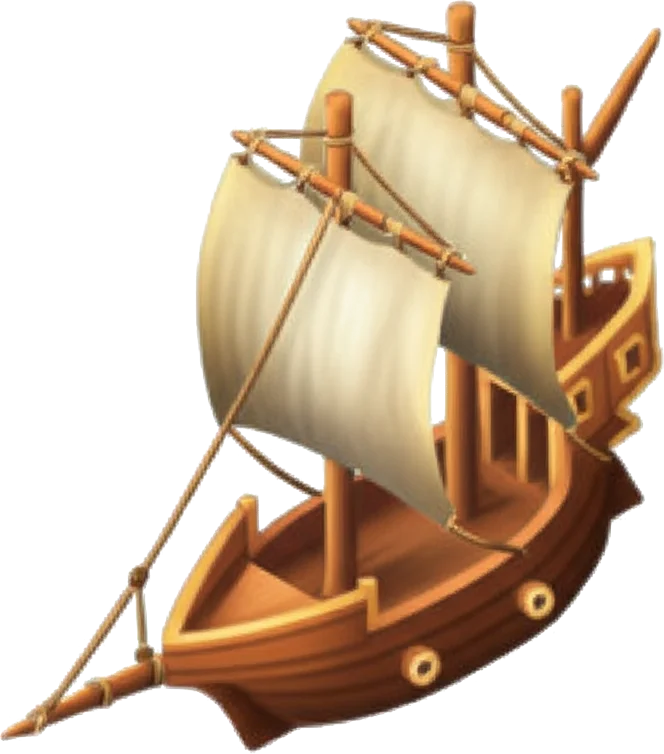 Small Merchant Ship | 80 | 5 | 0 | 5 |
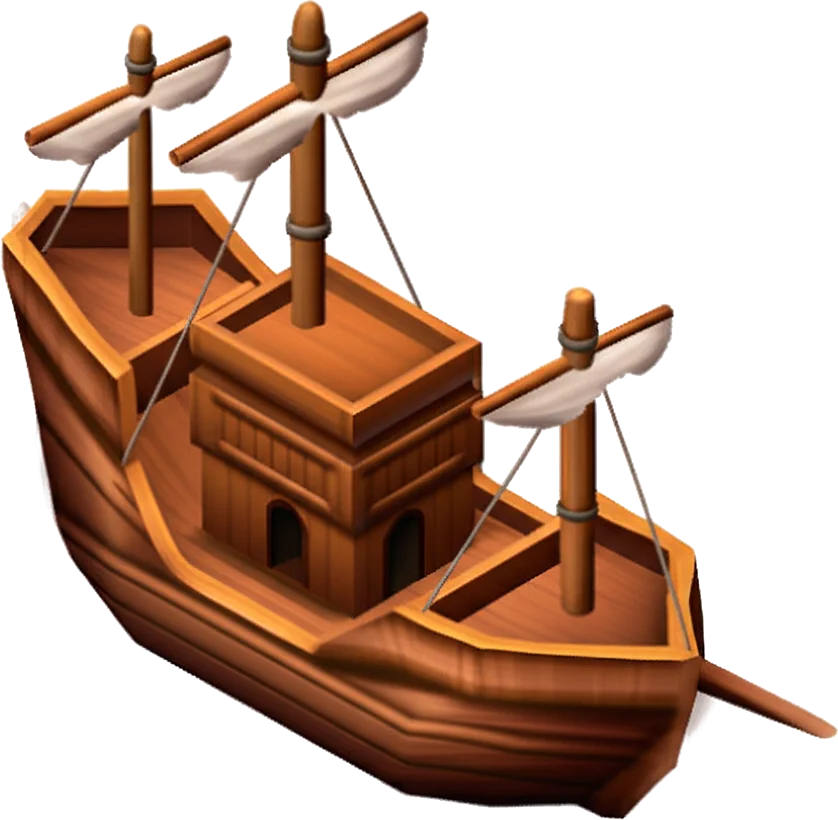 Large Merchant Ship | 200 | 10 | 0 | 10 |
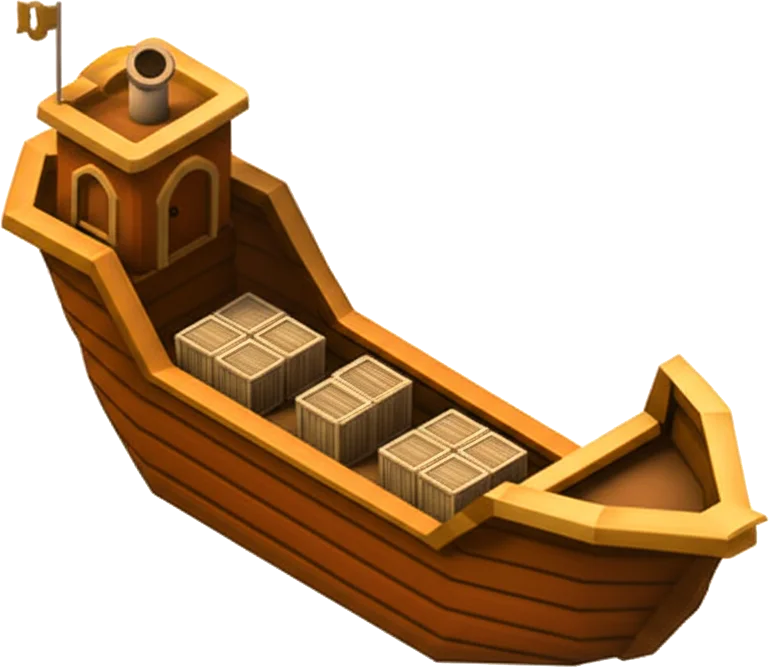 Colonisation Ship | 5000 | 0 | 0 | 5 |
The Way Home
A won raid sails home whole. The landing is where a raid pays: the wild defenders fight back, and a fleet can lose a ship or two on the beach. Once the shore is taken, the sea takes nothing on the voyage back, however many ships you sent.
That makes a few spare hulls free insurance. If the landing costs a ship, the spare ones carry what it would have, and the haul comes home full. A fleet that sails from an island under Rough Seas is slower at sea, but it loses nothing more on a raid.
Diminishing Returns
Raiding the same shore repeatedly yields less and less. The decay is on the target, not on the attacker-target pair, so two different captains striking the same island still bank onto the same curve. On an unclaimed island the counter resets 12 hours after the last raid.
A settled island remembers longer. Plunder a Governor's harbour and the counter there runs for 72 hours, so returning to the same shore day after day pays less each time. Working a fresh harbour is worth more than a fourth visit to a familiar one.
| Raid # on this target (in 12h) | Plunder Multiplier |
|---|---|
| First raid | 100% |
| #2 | 60% |
| #3 | 30% |
| #4 | 10% |
| #5+ | 10% (floor) |
Resources regenerate at 15% per hour, up to 150% of the tier's base stockpile. Rotate between multiple islands to keep returns high.
Treasure Chests
Chests are no longer scattered blindly across every shore. The archipelago marks a small set of uninhabited islands as treasure islands every few hours. They shimmer on the region chart for anyone to see. Only those sparkling shores can yield a chest.
Raid a treasure island successfully and the claim is yours. Most claims uncover a buried chest worth between 5,000 and 10,000 bonus coins (90% of claims). A smaller share (10%) uncovers a cursed chest instead, destroying all landing troops while the ships escape unharmed. Either way the shimmer fades the moment the claim is made.
Raiding Strategy
- Scout for specialisation. Send spy ships to survey uninhabited shores. The report reveals which resource dominates. A lumber-rich abundant island is worth sailing across the map for.
- Fill the holds. Carry capacity decides the haul, and the shore's stockpile caps it. Ships beyond what the shore holds bring nothing extra, but they cost nothing either.
- Favour rich and abundant shores. They hold 3–5 times the resources of a poor island and defend barely harder.
- Rotate targets. Diminishing returns punish repeated hits on the same island. Spread raids across the map.
- Build a Workshop. Resource plunder works without one, but durable goods from raids require the launching settlement to maintain a Workshop.
- Claim the best shores. Raiding fills the coffers, but colonising a specialised island delivers a permanent production advantage. The best lumber islands are worth conquering, not just plundering.
- Use cheap troops. Stone throwers are expendable. They fight adequately and cost far less to replace than spearfighters or archers.
See Plunder Protection for how a Storehouse shields your own resources from enemy raids.
Common questions
Should I raid the same island again immediately?
Usually no. Diminishing returns belong to the target, so repeated hits make that shore worse for everyone until the window fades.
Do troops help carry plunder?
No. Ships provide the cargo space that brings resources home, and warships alone beat the wild defenders. On an empty shore troops are only needed to pick up a chest or goods. Troops sent for nothing are troops away from home.
Why did a winning raid still lose units?
The landing. The wild defenders fight back before they break, and the report’s landing record shows what they took. A cursed chest also takes every landing troop. The voyage home itself costs nothing.
Can a raid run into a patrol?
No. Raids only strike uninhabited shores, and those never raise a patrol. A patrol is a Governor's own defence over an inhabited island: you meet one when you plunder or assault a player, where it can turn a quiet run away or screen your landing at sea. See Combat: the defender's answer.