Goods
Goods are the durable cargo of the archipelago: chests, lanterns, tinctures, relic shards, and the odd crate of plunder. They are not another resource. You count them one by one, you keep them in a Workshop, and you spend them on the things gold cannot buy.
 Workshop
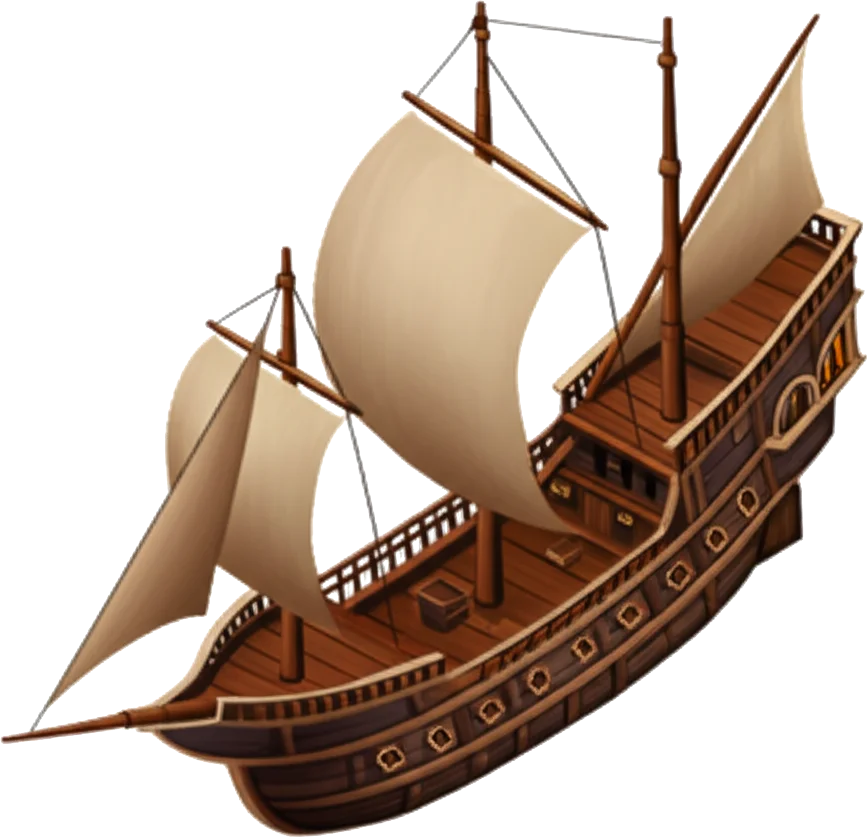 Raiding
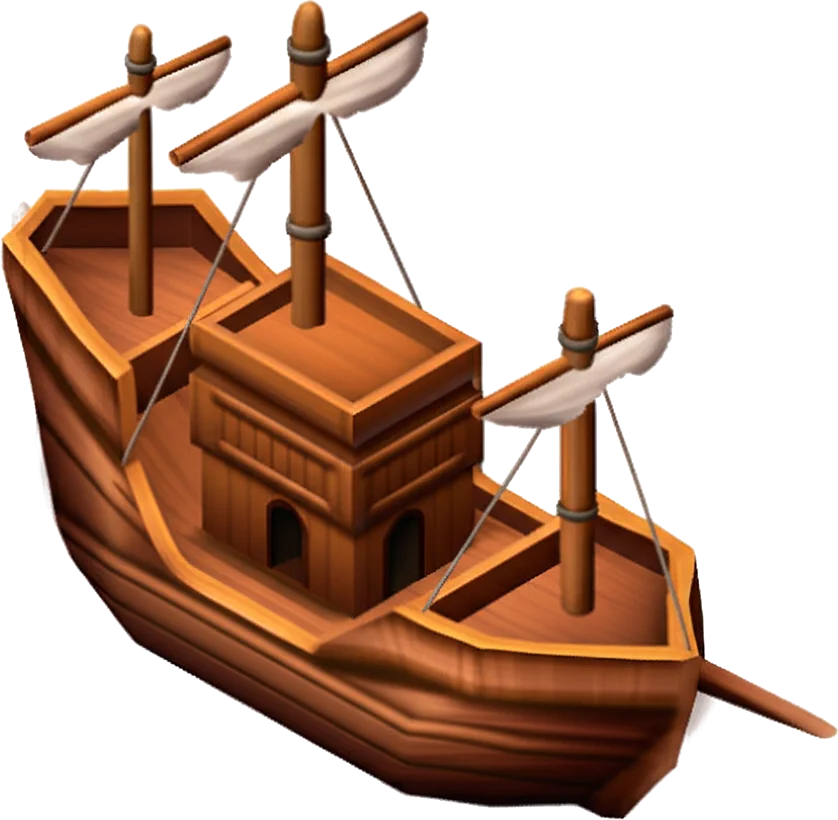 Expeditions
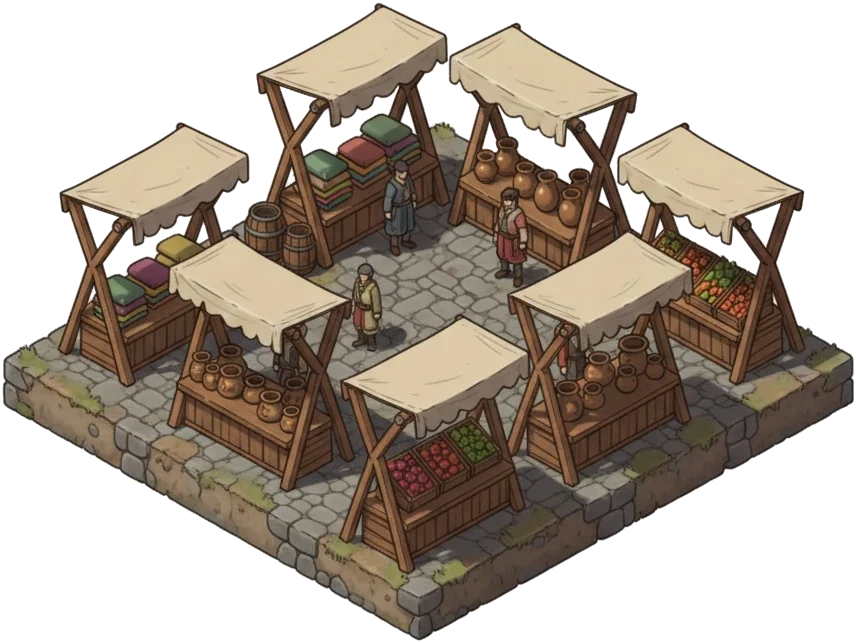 Marketplace
Consult a good's description before spending coins or supplies. Its portrait in a market listing, crafting recipe, cargo manifest or mission supply list opens its particulars: what it helps with and when to use it. The same particulars are available beside goods offered to hasten construction, training, shipbuilding and research, even with none in store. Reading them spends nothing and leaves the current order intact.
What goods exist
Every good in circulation, grouped by where it comes from. Common goods are made on the common bench every island works. Specialty goods are made at a steward's doctrine bench. Rare goods are never made at all, only found.
Common goods
These are made at the common bench, which every steward's doctrine shares. They are the everyday tools of the archipelago: faster building, training and shipwork, safer colonies, a cure for plague, and a War Drum for the assault.
What is on the common bench?11 goods
| Good | What it is |
|---|---|
| Fine Rope | Tarred ship's rope, trusted for climbs and rescues. |
| Repair Timber | Stubborn planks, ready to hand. Speeds up whatever your builders are raising. |
| Waxed Sailcloth | Oiled cloth that keeps the weather on the right side of the ship. Speeds up work in the shipyard. |
| Supply Chest | Dried food, water, rope, and pitch. Steadies a colonisation claim, and two chests will break a famine. |
| Arms Crate | Issue-arms for fresh recruits. Speeds up troop training. |
| Storm Lantern | A flame that holds in foul weather. Helps a colonisation ship limp home. |
| War Drum | A deep skin-headed drum carried on the lead ship. Stiffens an attack, so your assault lands harder. |
| Swift Sails | A spare suit of light, well-cut canvas. The fleet runs faster on attack, raid, or cargo runs. |
| Medicine Chest | Bandages and bitter oils. Lifts a plague off an island. |
| Old Guild Seal | A bronze seal from a vanished merchant house. Still opens doors, and hurries your scholars' research along. |
| The Wayward Compass | Four fragments rebound into one needle. Use it to name a hidden god. |
Specialty goods
| Good | What it is |
|---|---|
| Bitter-Shore Tincture | A salvaged apothecary's vial. Looks like medicine; the apothecaries who know where it came from will not handle it without gloves. |
| Lumen Crystal | Bottled lumen, pressed at the Wealth bench. Ships safely where raw lumen cannot; use it at a Church to pour the light back out. |
Rare goods
| Good | What it is |
|---|---|
| Salt-Worn Tablet | An old stone of shifting marks. Shrine lore in the hand. |
| Blackened Idol | A small black figure, always found upright. A Black Tide relic. |
| Compass Fragment | A cracked bronze ring. Four make a Wayward Compass at the common bench. |
| Pirate Plunder | A hold of mismatched coin and plate. Sell it on, or crack it open and count the coin and gold yourself. |
Doctrine shot
Four specialty goods that are ammunition, the first the archipelago has needed. Each is cast at its doctrine's bench from that doctrine's ore, and each hurts exactly one thing: the creature of the same doctrine that comes up through a Lumen Rupture. Against a wall, a hull or the wrong creature a crate does nothing and comes home unspent. They trade and sell like any other good, and a raider never finds one in your stores.
| Good | What it is |
|---|---|
| Ember Shot | Catapult shot cast from Ember Ore. Ten crates and the catapults to throw them take one mark off the attack creature, and nothing else notices it. |
| Aegis Shot | Catapult shot cast from Aegis Stone. Ten crates and the catapults to throw them take one mark off the defence creature, and nothing else notices it. |
| Veil Shot | Catapult shot cast from Veilglass. Ten crates and the catapults to throw them take one mark off the stealth creature, and nothing else notices it. |
| Sun Shot | Catapult shot cast from Sunstone. Ten crates and the catapults to throw them take one mark off the wealth creature, and nothing else notices it. |

Goods are not resources
Gold, stone, lumber, and lumen pour into a single pool and pay for almost everything. Goods are the opposite: each one is a distinct item with its own purpose, held in the Workshop rather than the Storehouse. They do not rot and they do not decay, so a chest set aside today is still a chest a month from now.
Unlike raw lumen, goods travel well. A 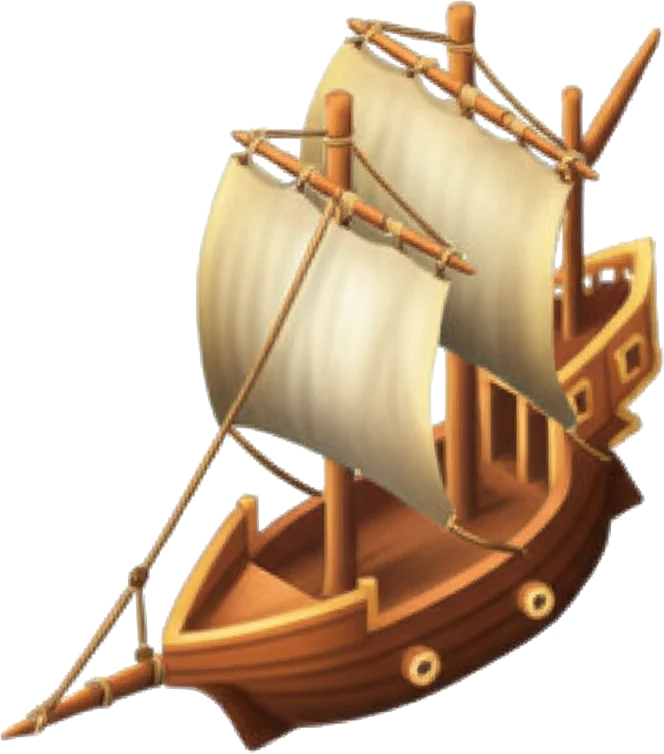 transport convoy can carry goods between settlements alongside resources and troops — they are deducted when the convoy sails and arrive when it docks. The destination still needs a Workshop with shelf space: goods that have nowhere to land turn around and come home with the ships.
Where goods come from
Four currents feed your shelves, and most islands see all of them in time.
| Source | What it gives |
|---|---|
| Crafting | The chests, lanterns, and relics your Workshop's benches make to order. |
| Raiding | Goods lying on uninhabited islands, carried off by a raid that wins the shore. |
| Expeditions | Goods awarded for finishing a route, or found mid-voyage. |
The Marketplace is the fourth: anything another Governor is willing to sell, you can buy, as long as you have the storage for it.
What goods actually do
A good is rarely just stock to sell. Most carry a concrete use, and the Workshop spells out the exact figures on each good's card under Helps with:
| Use | What it means |
|---|---|
| Hastening a queue | Spend goods as you place a building, training, ship, or research order to cut a share of its time. Each good shaves a further slice off the original duration, and there is a cap per order — a job can be hurried a long way but never finished instantly. |
| Voyage loadout | Load goods onto a fleet before it sails to make it faster or hit harder. Spent at departure and capped per voyage. |
| Settling a new island | Steady the charter's odds, or lose fewer ships when a charter fails. |
| Curing and mending | Clear an affliction such as the Black Rot, at a church. |
| Assembling and storing | Combine fragments into a relic, or bank surplus lumen as a crystal you can ship safely. |
Because every use is capped, goods reward provisioning for the moment that matters rather than hoarding for its own sake. A good with no listed use is lore, proof, or trade stock — worth keeping or worth selling, but not a lever.
Trading goods
Most goods can be posted on the Marketplace, and the valuable ones are how a quiet rear island turns its surplus into gold. Remember that a good sitting in an open offer still counts against your Workshop storage until the offer clears, so listing too much at once can block your own crafting.

Reference
When does a raid find a good?goods lying on the shore
A raid does not roll for goods. Goods lie on uninhabited islands, washed up or left behind, and a raid that wins the shore with soldiers still standing carries off each one it finds there, provided your Workshop has room. A good you have no room for stays where it lay, for the next raider, and the report tells you what you left behind.
Common questions
Can I move goods between my own islands?
Yes — send them with a transport convoy, the same order that moves resources and troops. The receiving island needs a Workshop with room to spare; goods that cannot be stored on arrival are returned with the convoy.
Do goods expire?
No. Goods never decay. The only limit is space: your Workshop holds a fixed number, and goods in open Marketplace offers count against it until those offers clear.
What happens when my Workshop is full?
New goods have nowhere to land. A finished craft waits, a raid find is left behind, and a purchase cannot complete. Sell, use, or ship out goods to make room, or raise the Workshop for more shelf space.