Intercept
A blockade is piracy with patience: warships loiter in an enemy island's waters and ambush the cargo convoys passing through. It never enters the harbour, never fights the garrison, and never leaves a name behind — it only robs cargo in transit.
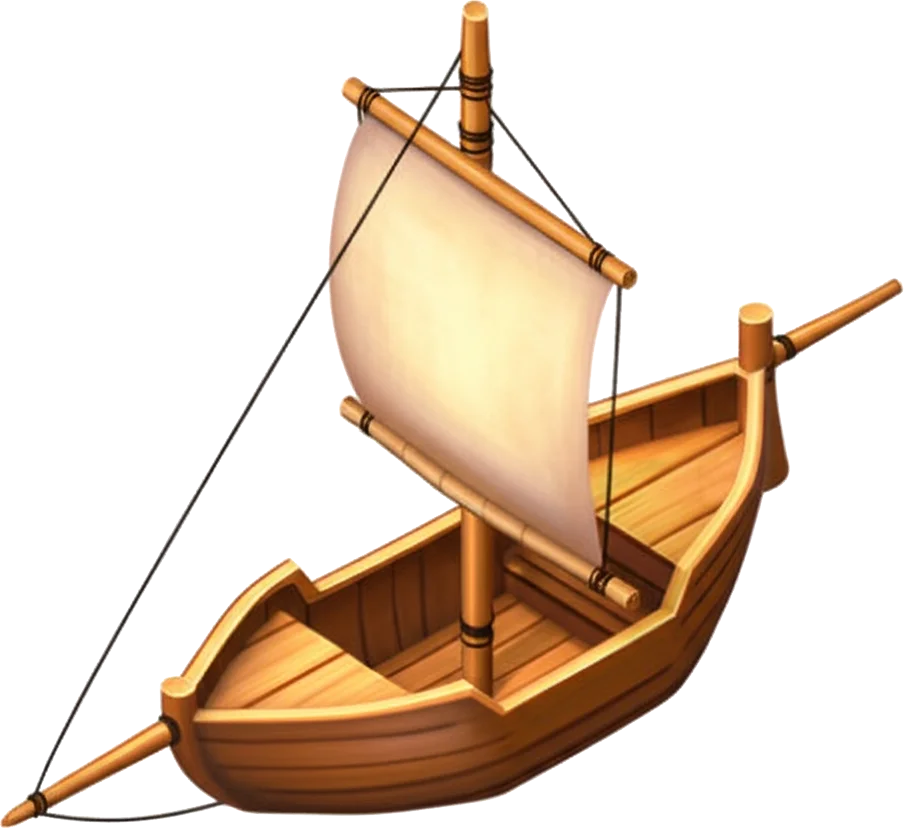 Plunder
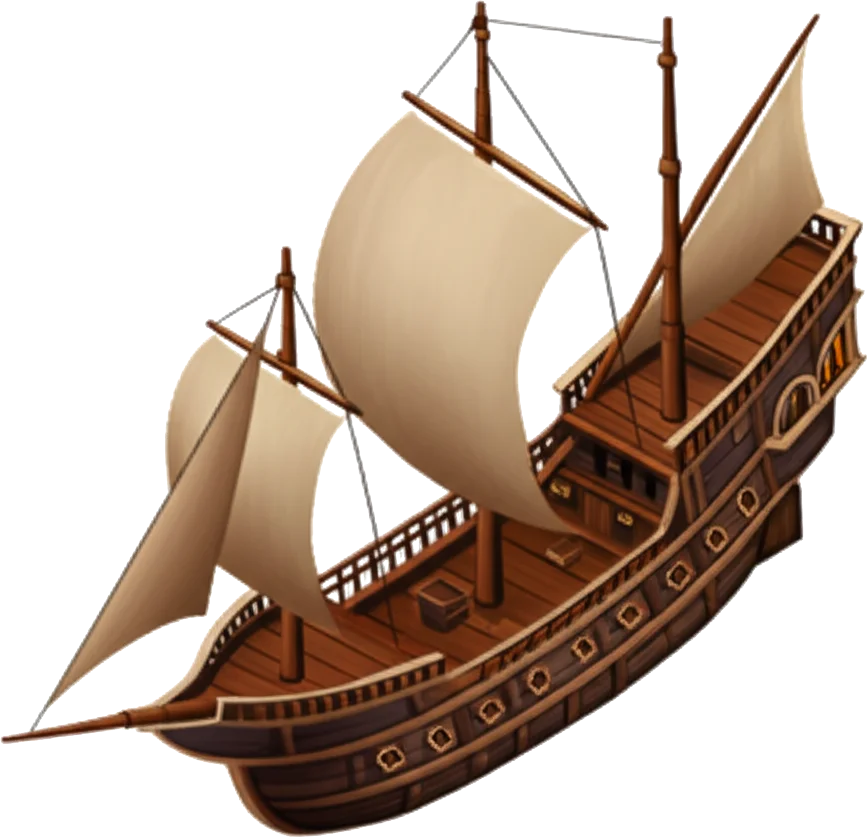 Attack & Battle
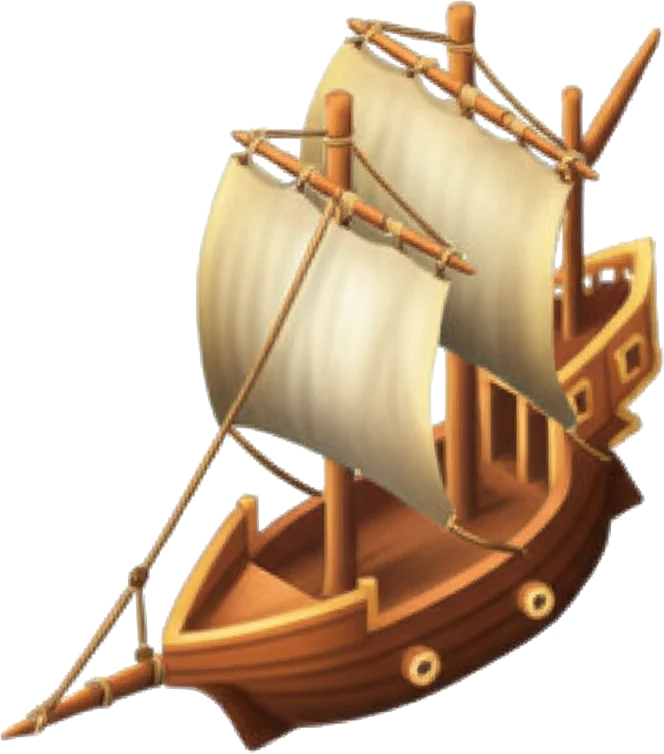 Transport
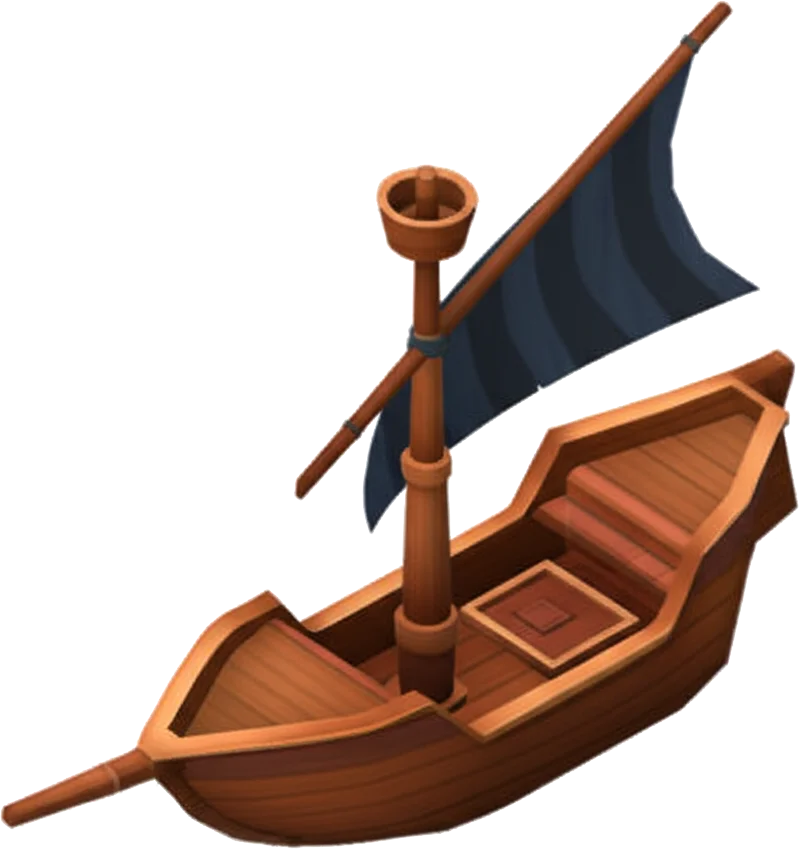 Espionage
How a blockade works
An assault throws a fleet at the walls; a plunder run slips into the harbour and out again. The third choice on the Attack menu, Intercept, never enters the harbour at all. You send warships to loiter in an enemy island's waters and ambush the cargo convoys passing through. There is no pitched battle, no ground taken, and no building touched: a blockade only robs cargo in transit, and like a plunder run it leaves no name behind.
A blockade over an island preys on traffic in both directions: the cargo that island ships out, caught as it clears the harbour mouth, and the cargo other Governors ship to it, caught as it arrives. The loser is always the sender of the convoy. Warships do the work, exactly as in a plunder run; they are the holds that carry off the haul, so a blockade needs no merchant ships, and what it can steal at a time is bounded by its hold.
Sea-robbery of this kind must be sanctioned. A blockade can only sail from an island that has studied Letters of Marque in the Seafaring branch, and like all research the commission is held by the launching island alone.
Your fleet sails to station and loiters there until one of three things ends the watch:
- Its hold fills. Once the ships are laden to capacity, the blockade turns for home with its haul.
- The window closes. You set a patrol window when you launch, up to 24 hours, or leave it open-ended and let the fleet hold station until you call it back.
- You recall it. Order the fleet home whenever you like and it sails back with whatever it has already taken.
A convoy carrying more than the blockade's remaining hold is only part-robbed: the raiders lift what they can carry and the convoy sails on with the rest. A convoy whose whole load fits is taken clean and turned straight home, empty. Either way the victim learns only that they were ambushed in open water, never by whom or from where.
Size cuts against the bully here just as it does for plunder. When a great realm blockades a much smaller one, the pickings are scattered: each catch skims only a fraction of the cargo, down to a tenth at the widest gap, and the convoy keeps the rest. A near-peer or punch-up blockade skims in full. Preying on the small is long work for thin reward.
One island, one blockade
You may hold a given island with one blockade at a time, however many harbours you command. To set a fresh watch over the same island, first recall the one already there. You are free to blockade several different islands at once, and nothing stops other Governors from setting their own watch over an island you are already blockading.
When more than one fleet blockades the same island, a caught convoy is split evenly between the watchers, each taking its share up to its own hold. Two blockades over a convoy of a hundred gold take fifty apiece; if one fleet's hold is too small for its share, the remainder sails on with the convoy.
Being spotted — the defender's Watch Tower
A blockade is quiet, not invisible. A lone raider slips in unseen, and every hull after that adds to the fleet's silhouette — though with diminishing weight, so even a serious raiding fleet reads as a chance of being noticed, never a certainty. Heavy hulls loom larger than small ones. Your Espionage research is cover: a practised spymaster's fleet sails markedly quieter, though never silent. And size tells against the bully here too — blending into a bigger realm's traffic keeps you quiet, while a great fleet parked over a small harbour stands out.
Being spotted only warns. When a defender's Watch Tower picks a blockade out (a taller tower spots a fainter one; no tower is blind), they learn that raiders are off their coast — but never who. It costs you no ships, no loot, and no name. The warning's purpose is to prompt the one answer a blockade has: raise a patrol in your own waters to drive it off.
If that patrol comes out to meet you, your fleet reports the fight home: whether the escort held or was sunk, and what the patrol cost you in hulls. Either way the blockade is over — a fleet that has had to fight for a lane turns for home with whatever the holds already carried, so a single patrol, however small, is enough to move you on. Set a blockade expecting to lose it the moment the defender answers, and count what it caught before then.
Common questions
Can I set two blockades over the same island?
Not as one Governor. You hold an island with a single blockade at a time, from any of your harbours, and must recall it before setting another there. You may blockade different islands at once, and other Governors may blockade the same island; when several fleets watch one island, a caught convoy is shared out evenly between them.
Does a blockade harm the island or its garrison?
No. A blockade never lands, never fights the garrison, and never touches buildings. It only robs cargo moving in and out of the island's waters, and the victim learns they were ambushed but never who set the watch.
What happens if my blockade is spotted?
Nothing, by itself. Being spotted only warns the defender that raiders are off their coast; it costs you no ships, no loot, and no name. The danger comes after the warning, if the defender raises a patrol: one patrol ends the blockade, even one your escort beats.